

All spins of a digital slot reel, any card dealt in an online blackjack hand, and each virtual roulette ball drop depends on a Random Number Generator—a technology invisible to the player but controlling the entire experience https://atefiacasino.eu/. At licensed platforms such as Atefia Casino, certified RNG software ensures outcomes cannot be forecast, manipulated or retroactively altered. Comprehending how these systems work transforms a session from blind luck into informed participation. This guide examines the engineering, mathematics and regulatory oversight that keep digital dice rolling honestly, giving new players the knowledge to tell apart genuine randomness from persistent myths.
Widespread Myths That Deceive New Players
A lingering myth is that a slot machine is ready for a payout after a losing streak. This gambler’s fallacy suggests the RNG has a memory, but the algorithm retains no record of past spins. A game that has not paid a jackpot for months is no more likely to hit on the next spin than at any prior moment; probability restarts with each generation. Similarly, the notion that casinos can remotely tighten games misinterprets certification: altering the RNG requires re‑certification and leaves an auditable trail. Some players believe larger wagers trigger better odds, but the RNG gets no input about stake size—number generation is identical for minimum and maximum bets. The only difference is payout multiplication. The idea that playing at certain times yields better results disregards the continuous generation cycle. The RNG does not know the hour, the number of active players or whether it is a holiday; these external factors have no pathway into the mathematical function.
Mobile Play and RNG Consistency
Modern casino RNGs function on safe servers, not on the player’s device. The mobile app or browser functions only as a display interface, relaying taps and getting outcome data. A five‑year‑old phone and a premium desktop obtain the same random numbers; device processing power and connection speed affect animation smoothness but have no effect on randomness integrity. The encrypted link between device and server prevents tampering with outcome data in transit. Atefia Casino’s game library employs HTML5, standardizing communication so that all RNG requests pass the same encrypted pathway, whether used via a dedicated app or a mobile browser. Game history logs indicate that mobile rounds are the same as those recorded on desktop; the server outcome is definitive. This architecture ensures a player can swap devices mid‑session without resetting the RNG stream, and the consistency of server‑side generation stays one of the strongest arguments for mobile casino fairness.
Provably Fair Systems and Distributed Ledger Verification
Provably fair systems allow players verify each outcome using cryptographic hashes, eliminating the need to trust an operator’s word. Before a round, the server generates a seed, discloses its hash with the player and later discloses the seed. The player validates the hash matches, then joins the server seed with a client seed from the browser to calculate the result, so neither party can unilaterally influence the outcome. This transfers verification from institutional audit to mathematical proof. While the technology started in cryptocurrency casinos, its principles are shaping mainstream platforms. It addresses the core question of how a player can be confident they are not being cheated. Atefia Casino functions within the traditional UK regulatory framework, depending on third‑party lab certification. Still, comprehending the provably fair model deepens appreciation for what randomness verification involves; both approaches reinforce that outcomes are generated without post‑hoc manipulation.
In what manner RNG Integrity Influences Bonus Wagering
Introductory promotions at sites such as Atefia Casino have wagering requirements detailing how many times the bonus amount must be played before withdrawals. These conditions are present because the RNG ensures that over sufficient volume the house edge will statistically consume the bonus unless favourable variance occurs. The operator does not depend on unfair games; it counts on the mathematical certainty that a fair RNG paired with a house edge yields predictable long‑term results. Different game categories contribute unevenly to wagering precisely because their RTPs and variance differ. Slots usually contribute 100 percent, while blackjack—where basic strategy can lower the house edge below one percent—often contributes much less. This is no deception but a direct consequence of the RNG’s fairness. The RNG ensures each round is independent, and the weighting reflects the statistical speed at which a bonus balance is expected to erode. Checking these terms alongside a game’s published RTP reveals the true cost of pursuing a bonus.
The Mathematical Foundation of Equitable Gameplay
Behind every PRNG lies a function designed for uniform distribution, implying that over millions of attempts each potential value shows up with equal frequency. For a virtual six-sided die, each digit from one to six ought to appear approximately 16.67 percent of the time. Brief runs, such as three matching numbers in a row, are mathematically assured and do not suggest a problem. Crucially, each generation cycle is independent; the RNG never adjusts for past results, so a six continues to be equally probable after ten consecutive sixes as at any other point. Game developers then translate these equally distributed numbers onto balanced game structures. A slot can have a virtual reel with 256 positions, but high-value symbols take up far fewer stops than low-value ones. The RNG simply chooses a number with equal probability, and the software converts it to the matching symbol. The house edge emerges purely from this allocation, never from a skewed generator.
How RNGs Drive Various Game Categories
Slot Games and Virtual Reels
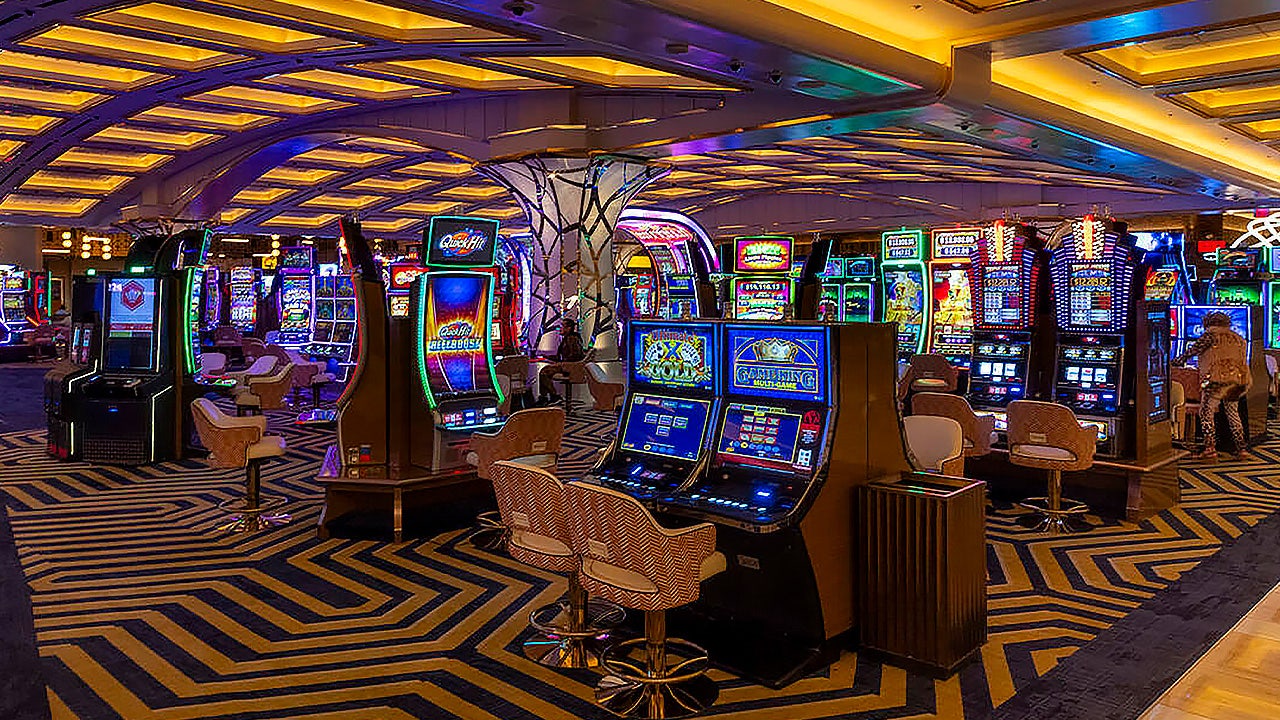
Contemporary video slots capture an RNG value for each reel the instant the spin button is pressed. That number dictates the stopping position on a virtual reel strip containing hundreds of stops. The on-screen spinning is a cosmetic animation of an already determined result; a dramatic near-miss where a jackpot symbol hovers just above the payline is purely visual. The algorithm does not take into account bet size, account balance or previous win history. Progressive jackpot slots feature a secondary RNG check—often a highly improbable number match—that triggers the top prize independently of the main game outcome. Each reel stop has the same underlying probability, but the symbol weighting creates the hit frequency players experience.
Card Games and Deck Shuffling
Digital blackjack, roulette and poker variants simulate deck shuffling through permutation algorithms driven by the RNG. Unless a specific variant advertises a penetrative shuffle, the virtual deck is effectively reshuffled after every hand. When a card is requested, the software chooses a number corresponding to one of the remaining cards. In European roulette simulations, the RNG generates a value from 0 to 36 with uniform probability for each pocket, and the animated wheel spin merely visualises a result that was fixed the moment the number was captured. This architecture ensures that card distribution and wheel outcomes follow the same statistical profiles as their physical counterparts.
Instant Win and Special Games
Scratch tickets, keno draws and virtual sports all operate on the same RNG foundations. In a digital scratch card, the prize layout is predetermined by an RNG event before the player starts scratching; the animation only reveals a pre-existing result. Keno games utilize the RNG to draw numbered balls from a virtual pool, with each number having an equal probability of selection on every draw. Virtual horse racing and football simulators use weighted probability tables fed by RNG outputs, ensuring that fictional form statistics mirror calibrated odds. These specialty games have the same certified RNG infrastructure as slots and table games, maintaining uniform fairness standards across the entire platform.
What a Random Number Generator Truly Does
An RNG in a casino is not a simple coin-flip emulator. It is a complex algorithm generating thousands of numbers per second, even if no game is being played. When a player hits spin or asks for a card, the software captures the newest number from that high-speed stream and converts it into an outcome—a reel stop, a card value or a roulette pocket. Because the number was already generated in the background before the player acted, the result is genuinely unpredictable from the player’s viewpoint. The system has no memory; each captured number is independent. Most online casinos, including those at Atefia Casino, use pseudo-random number generators (PRNGs). A PRNG starts with a seed derived from unpredictable server-side events—such as the exact microsecond of network activity or hardware temperature fluctuations—and then runs a complex mathematical formula. Although deterministic, the output passes every statistical test for randomness, making the experience indistinguishable from true randomness.
Regulatory Oversight and Consumer Safeguards in the UK
The UK Gambling Commission mandates rigorous RNG standards. All gambling software offered to British residents must be tested by an approved lab against published technical standards, including specific statistical tests and confidence intervals. Operators present their RNG implementation to ongoing monitoring, and the Commission can demand raw data at any time. Non‑compliance can lead to license suspension, financial penalties or criminal prosecution, and re‑evaluation is necessary after software updates. For players at Atefia Casino, this means the RNG has passed scrutiny from independent parties with the authority to revoke the licence. The platform’s terms mention its licensing jurisdiction and the testing bodies, and players can often locate the certificates themselves. The combination of independent technical testing, regulatory enforcement and sound PRNG mathematics allocates trust. No single entity—operator, developer or lab—can assure fairness alone; the system works because each layer checks the others, giving players the benefit of redundant verification.
Certification and Autonomous Auditing Bodies
Autonomous testing laboratories put casino RNG software to thorough statistical analysis before certification is awarded. Organisations such as eCOGRA, iTech Labs, GLI and BMM Testlabs perform billions of simulated game rounds and employ tests like chi-squared, Kolmogorov-Smirnov and the diehard battery. They also audit the source code to confirm that no hidden logic changes outcomes based on player behaviour or account status. The process takes weeks and must be repeated after significant software updates, so certification is an ongoing commitment rather than a one‑time achievement.
How Certificates Shield Players
A valid certificate attests that the RNG is uniformly distributed and that published return-to-player (RTP) figures are precise. The RTP is not a per-session promise but a long‑run statistical estimate derived from the RNG’s distribution and the game’s paytable. For UK-facing platforms such as Atefia Casino, the UK Gambling Commission requires certification from an approved lab. Players can usually view the certificates via a footer link, verifying which games were tested and the date of approval. This third‑party oversight distributes trust: no single operator, developer or tester can unilaterally assert fairness, and the redundancy defends players.
